
Loading...
Serving Texarkana, TX and surrounding areas. (430) 278-0102
Texarkana heat, heavy rain, and tree debris wear down unsealed concrete fast. A proper seal keeps water out, stains off, and your driveway or patio looking right.
Concrete sealing in Texarkana puts a thin protective layer over your driveway, patio, or garage floor that keeps water, oil, and stains from soaking in - most jobs are completed in a single day, with the surface ready for foot traffic within 24 hours.
In Texarkana, where summer temperatures push above 95 degrees and annual rainfall tops 47 inches, unsealed concrete absorbs moisture and then expands and contracts with every temperature swing. That repeated cycle is what cracks slabs and drives surface flaking over time. Sealing is the single most cost-effective step a homeowner can take to extend the life of existing concrete. When paired with proper surface preparation, a fresh seal can add years to a slab that would otherwise need full replacement.
Most homeowners call us when they notice water soaking into the driveway instead of beading up, or when tree sap and leaf tannins have left stains that will not wash off. Both are clear signals the existing sealer is gone and the concrete is absorbing whatever lands on it. Catching it at this stage is far cheaper than waiting until the surface starts to crack and flake.
Pour a small cup of water on your driveway or patio. If it soaks in within a minute or two and leaves a dark wet spot, the sealer is gone. Properly sealed concrete causes water to bead on the surface the way it does on a freshly waxed car. If that is not happening, the surface is unprotected.
Oil drips, rust rings from planters, and dark patches from leaves or pine sap sitting too long are all signs that your concrete is absorbing what lands on it. In Texarkana's shaded yards, pine sap and sweet gum debris leave stubborn stains faster than most homeowners expect - and once staining is in the concrete, it is much harder to remove.
If your concrete looks pale or dusty even after washing, the surface layer is breaking down. This is especially common on older slabs in Texarkana's established neighborhoods, where decades of sun and rain have worn away any original protection. A fresh clean and seal can stop further deterioration.
Hairline cracks and small chips are early signs that moisture has been getting in and the seasonal temperature swings - even Texarkana's mild version of them - have been doing damage. Sealing will not repair existing cracks, but it stops them from getting worse by keeping water out of the slab going forward.
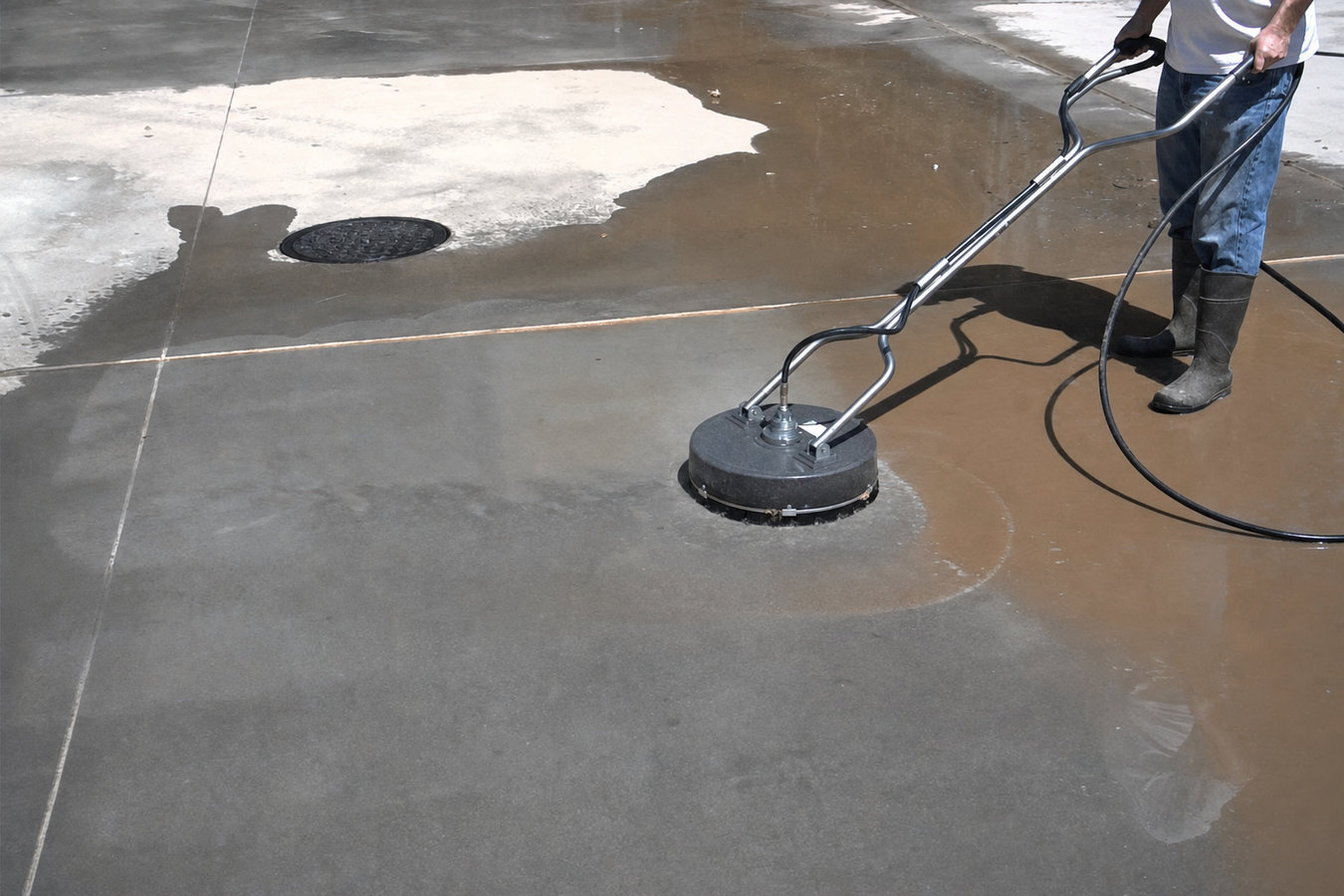
Every sealing job starts with thorough prep - pressure washing to remove dirt, oil, algae, and old peeling sealer. The prep phase takes longer than most homeowners expect, and it is the single biggest factor in how long the finished job holds up. Skipping prep or rushing it is how previous sealers ended up peeling, cloudy, or uneven. When the surface has deeper issues - adhesive residue, staining that pressure washing cannot remove, or a layer of failed coating - we recommend pairing the job with our concrete grinding and surface preparation service before any sealer goes down.
Once the surface is clean and completely dry, we apply the sealer and let it cure. The finish options range from a clear matte that leaves the concrete looking exactly as it does now, to a slight sheen that enhances color in decorative or stamped surfaces. For concrete that needs more than just protection - discoloration, surface wear, or texture changes - our concrete resurfacing and overlays service can refresh the slab before sealing.
Suits homeowners whose driveway takes daily vehicle traffic and full sun - the conditions that wear sealers down fastest in Texarkana's climate.
Suits shaded outdoor surfaces near mature trees where organic debris and moisture cause staining and surface breakdown faster than in open areas.
Suits homeowners who want a clean, protected floor that resists oil drips and chemical spills without committing to a full epoxy coating system.
Suits stamped, stained, or polished concrete where a finish-enhancing sealer both protects the surface and brings out the texture and color.
Texarkana's combination of hot, humid summers and above-average rainfall puts concrete through a harder annual cycle than most of the country. The area receives roughly 47 to 50 inches of rain per year, and the clay-heavy soil under most residential slabs swells and shrinks with every wet and dry spell. Water that soaks into unsealed concrete accelerates that movement, widening existing cracks and creating new ones. Sealing is not cosmetic here - it is the main barrier between your concrete and the conditions that shorten its lifespan. Homeowners in Texarkana, TX who let sealing lapse too long often find themselves looking at repair costs that could have been avoided with a resealing job every few years.
A large portion of Texarkana's neighborhoods were developed in the 1950s through 1980s, and a lot of that original concrete is still in place. Older slabs in established areas have often gone years without any protection, with surface wear, staining from mature trees, and minor cracking already underway. The timing issue matters too: late spring and early summer in Texarkana bring the heaviest rainfall, making those months a poor window for sealing work. The best results come from scheduling in late summer or early fall, when surfaces can dry fully and cure properly before the next wet season arrives. Homeowners out in Atlanta, TX face the same seasonal conditions and are well within our service area.
We ask about the surface you want sealed, roughly how large it is, and what condition it is in. We reply within one business day and can usually schedule an on-site visit within a few days of your call.
We look at the size of the area, how worn or stained the surface is, whether cracks need attention first, and whether the concrete has been sealed before. A good contractor walks you through what they find before asking you to commit to anything. The visit typically takes 15 to 30 minutes.
Before any sealer goes down, the crew thoroughly pressure washes the surface to remove dirt, oil, algae, and old peeling sealer. This step often takes most of a day and is the single biggest factor in whether the finished job looks good and lasts. Clear the surface of everything before they arrive.
Once the surface is clean and fully dry, the crew applies the sealer and lets it set. Plan on 24 hours before foot traffic and 72 hours before driving on it - longer if the weather is humid. We walk the finished surface with you before leaving and address any touch-ups on the spot.
We walk your surface in person before quoting. No commitment required.
(430) 278-0102The most common reason a fresh seal fails within a year is that the surface was not cleaned and dried properly before application. We do not skip or rush the prep phase - pressure washing and full drying are non-negotiable steps on every job we take, regardless of how tight the schedule is.
We check the forecast before scheduling every job. We will not apply sealer if rain is expected within 24 hours or if humidity is high enough to prevent proper drying. In Texarkana, where late spring rains arrive reliably, timing the job correctly matters as much as the product used.
A lot of the concrete in Texarkana's established neighborhoods has been there for 40 to 60 years. We know what older slabs need before sealing - more thorough cleaning, crack attention, and sometimes a grinding pass to remove surface degradation that has built up over decades. American Concrete Institute standards guide how we assess and treat aging slabs.
We hold a current Texas registration through the Texas Department of Licensing and Regulation and carry active liability insurance. Texarkana straddles the state line, and not every contractor working this market is properly credentialed on the Texas side. We are, and you can verify it.
Concrete sealing is a straightforward service, but only when the prep is done correctly and the job is timed to the weather. Those two factors are where most sealing jobs succeed or fail - and they are both things we take seriously on every project.
When sealing alone is not enough - resurface worn, discolored, or damaged concrete before locking in a fresh protective layer.
Learn MoreFor interior slabs that need more than protection, polishing transforms the same concrete into a durable, low-maintenance finished floor.
Learn MoreLate summer and early fall book up fast - the best window for sealing work before the wet season. Call now to lock in your date.